Primate Behavior
Primate Behavior Graduate Program
Our program offers students the oppurtunity to obtain an interdisciplinary MS in Primate Behavior in the US
Our Mission
The Primate Behavior Graduate program at Central Washington university provides students with interdisciplinary, problem-oriented, broad-spectrum knowledge relating to primates with a particular focus on conservation issues. The program focuses on primate evolution, behavior and ecology in both free-living and captive settings.
Program Goals and Outcomes
Students entering the program are exposed to coursework and practical experience in the areas of anthropology, biology, and psychology and have opportunities to conduct sanctuary, zoo, and/or field research under the guidance of faculty mentors. The program serves students who will enter the work force for employment in sanctuaries, zoos, field research, conservation agencies, policy, teaching, or who will continue on to Ph.D. programs.
Upon successful completion of the MS in Primate Behavior, students will be able to:
- Demonstrate knowledge of the field of primatology, including current issues, methods, theories, and topics of study.
- Evaluate the interdisciplinary perspectives and approaches in the field of primatology.
- Examine the benefits of biodiversity.
- Apply content and skills in primatology to potential professional and career goals.
Factors contributing to the unique nature of this program:
- Central's Primate Behavior faculty are interdisciplinary, representing Anthropology, Biology, Philosophy, Primatology, Psychology, and Cultural and Environmental Resource Management.
- CWU has cultivated relationships with agencies that facilitate student research. Students can develop their own research site in consultation with program faculty.
- Although the program focuses on primatology, many theories and methodologies used by primatologists are more broadly applicable (e.g., evolutionary theory, comparative psychology). Students will be made aware of these interdisciplinary connections throughout the core curriculum and have opportunities to study species in addition to nonhuman primates.
- Students will leave the Master’s program with practical experiences in field techniques, behavioral data collection, research design, the use of cutting-edge software and hardware, and statistical analyses that will be vital in their careers or in their acquisition of a Ph.D. degree.
- The program focuses on humane, non-invasive behavioral research with nonhuman primates and emphasizes ethics in primatology and the importance of biodiversity.
WICHE Program
The Primate Behavior program at Central Washington University is part of the Western Regional Graduate Program, through which residents of Alaska, Arizona, California, Colorado, Hawaii, Idaho, Montana, Nevada, New Mexico, North Dakota, Oregon, South Dakota, Utah, Washington, Wyoming, Guam, and the Commonwealth of the Northern Marianas Islands pay in-state tuition for approved WICHE programs. If you are a resident of one of these states, please indicate that on your application to the program.
-
How to Apply
Admission to the MS program is a two-step process:
You must meet the general requirements for admission into the School of Graduate Studies and Research. This includes an bachelors degree from an accredited institution, a minimum GPA of 3.0.
Additionally, applicants for admission to the Primate Behavior program must meet the following qualifications:
- Students must hold an undergraduate degree in anthropology, psychology, or biology. Before admission, program faculty will evaluate the academic course work and experience of all applicants for admission and will recommend remedial course work if, in their judgment, there are deficiencies in pre-baccalaureate work which need to be overcome before entrance into the program. Admission to the program and continuation in it may be conditional on the applicant's satisfactory completion of remedial courses. Such courses will not count toward the program credit requirement, but in some cases they may be taken after admission to the program.
- International students for whom English is a second language must provide TOEFL scores to demonstrate English proficiency.
- Students must arrange for a graduate faculty advisor in the program to serve as their committee chair.
A complete application to the Primate Behavior program will include:
- CWU School of Graduate Studies and Research Application (including $75 application fee; waivers are available).
- Recommendation letters: Please provide three letters of recommendation from individuals qualified to evaluate your potential for graduate study. At least one letter should be from a faculty member at your previous institution (unless you have been out of school for 3 or more years). Other appropriate recommenders might include those who supervised your research or those who supervised your work in professional settings such as zoos, museums, or laboratories.
- Statement of Purpose: The statement of purpose should clearly convey your research interests and professional goals and provides us with an opportunity to assess your writing and reasoning abilities. In this statement, please address each of the following points:
- Specifically indicate what is appealing to you about the Primate Behavior MS program and what you hope to gain from participating in the program.
- How will your past research, academic, or professional experience contribute to your success in this program?
- Please indicate 2-4 program faculty members you would like to work with and why you think they would be appropriate mentors for your educational goals.
- Even the most carefully planned research project may require troubleshooting, and students may need to switch study sites, study species, or pivot their research question. Please describe a challenge you’ve encountered and the steps you took to generate a solution.
- Primates today face various anthropogenic pressures and live in a variety of free-range and captive settings. What is your position on the presence and use of primates in captive settings compared to more naturalistic field settings?
- If you applied for a graduate assistantship at Central, please describe skills you might bring to this job with respect to teaching, research, and educational outreach.
*Please note that GRE scores are no longer an admission requirement for the Primate Behavior Program.
NEW for Fall 2026 - Masters of Applied Science (MAS) in Primate Behavior that includes online coursework and internship/project as the culminating experience. For more information, please contact program co-directors, Dr. Lori Sheeran and Dr. Jessica Mayhew (Primate@cwu.edu).
-
MS Program Requirements
For more information on admission into the program see the Program Admission page. Students accepted into the Primate Behavior MS program will are required to to complete the following coursework including independent research and a written thesis in consultation with their thesis chair/advisor.
Course of Study (45 credits)
Core Requirements (26 credits)
PRIM 504 Primate Culture and Cognition (4 credits)
PRIM 505 Ethnoprimatology (4 credits)
PRIM 506 Survey of the Primates (4 credits)
PRIM 513 Research Methods in Primatology (5 credits)
PRIM 514 Research Design in Primatology (3 credits)
PRIM 700 Thesis (6 credits)Additional Courses (19 credits)
Electives should be selected in consultation with the student’s faculty advisor. Note that students can opt to select courses from among several foci.
Primate Behavior Graduate courses:
-
- PRIM 511 Primate Conservation
- PRIM 512 Monkeys of the Neotropics
- PRIM 516 Apes
- PRIM 518 Monkeys of Asia and Africa
- PRIM 519 Lemurs and Lorises
Students can take classes in philosophy that have relevance for how nonhuman animals are treated, their status in terms of legal rights, and the history of how humans have viewed and classified nonhumans as, for example, property or as being fundamentally different from humans.
- PHIL 463 Philosophy of Mind
- PHIL 465 Advanced Ethics
- PHIL 480 Philosophy of Science
- PHIL 498 Special Topics
Students can take courses in biology and anthropology that address conservation issues from both the perspectives of indigenous peoples and what biology can teach us regarding the effective long term management of small populations:
- BIOL 453 Mammalogy
- BIOL 501 Research Methods and Techniques
- BIOL 565 Advanced Animal Behavior
- BIOL 566 Conservation Biology
- BIOL 570 Developments in Organismic Biology
- REM 540 Ecology and Culture
Students can focus on the close relationship between the disciplines of primatology and psychology:
- PSY 441 Self-Injurious Behavior
- PSY 460 Cognitive Psychology
- PSY 473 Psychology of Thought and Language
- PSY 484 Violence and Aggression
- PSY 542 Evolutionary Psychology
- PSY 552 Human Growth and Development Advanced
- PSY 555 Design and Analysis for Applied Research
- PSY 558 Advanced Statistics
- PSY 565 Advanced Animal Behavior
- PSY 576 Comparative Psychology
- PSY 578 Applied Physiological Psychology
- PSY 580 Current Issues in Psychology
Students can focus on developing management skills that can be applied to free-living and captive nonhuman primates or other species.
- PRIM 502 Senior Animal Technician
- REM 502 Policy and Law in Resource Management
- REM 515 GIS in Resource Management
- REM 562 Issues and Conflicts in Resource Management
At least 30 credits of course work must be graded (rather than Satisfactory/Unsatisfactory). Students must follow the deadlines detailed in the School of Graduate Studies and Research website.
-
In order to complete the MS degree, graduate students in the PB program are required to complete a thesis, project, or submit a journal article to a peer-reviewed journal.
-
No human or animal research of any kind may be conducted without obtaining prior approval from the relevant department and university review committees. In the case of research with human subjects, the review is conducted by the Human Subjects Review Board. Animal research is subject to regulation by the Institutional Animal Care and Use Committee.
-
Credit toward the graduate degree will not be accepted for courses in which a grade of lower than C is earned.
-
Grades for all courses included on the Course of Study must average at least a 3.0, where the cumulative grade point average is calculated on all courses taken after admittance into a graduate program, whether part of the approved Course of Study or not. A graduate student whose cumulative grade point average falls below 3.0 at the end of any quarter will be placed on academic probation for the next academic quarter. While on probation, a student may not hold a graduate assistantship. If the cumulative grade point average remains below 3.0 after a second consecutive quarter, the student will no longer eligible to continue in the Master's program.
-
-
MAS Program Requirements
NEW for Fall 2026 - Online, internship-based MAS degree. Additional details coming shortly. For additional information, please contact the program co-directors, Dr. Lori Sheeran and Dr. Jessica Mayhew (Primate@cwu.edu).
CWU News

Arts and Humanities Month continues to build momentum
October 21, 2026 by David Leder
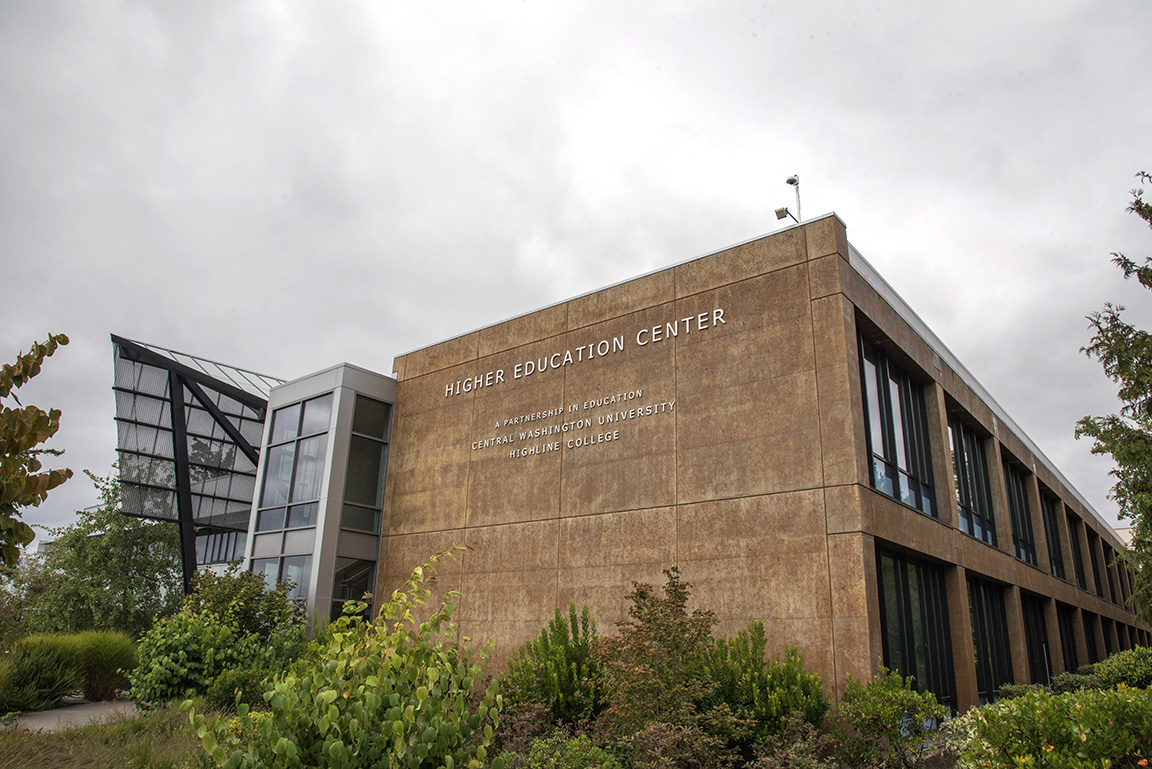
New position at CWU-Des Moines aimed at improving student experiences
October 21, 2026 by David Leder